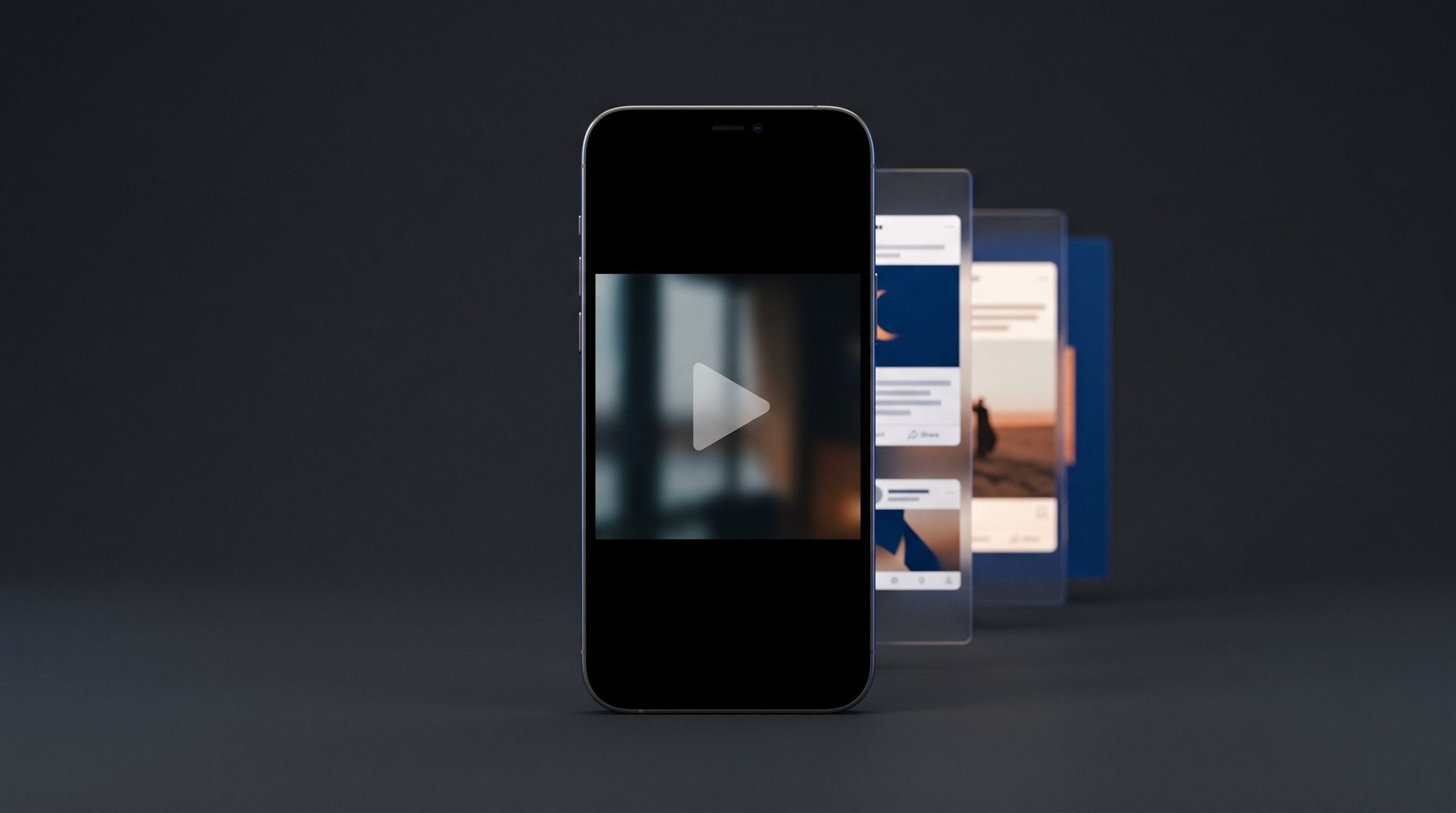

Facebook’s front door has traditionally been the Feed. For some users, Meta is now testing something very different: opening the app directly into full-screen Reels.
If video becomes the first thing a viewer sees, the question is no longer only whether your followers will see your next post. It becomes whether one strong piece of content can introduce you to someone who has never followed you before.
Facebook is testing a Reels-first home screen
On October 6, 2026, TechCrunch reported that some Facebook users in India now open the app directly into a full-screen Reels experience. Meta confirmed that the test is also running in Indonesia.
This is not a global rollout. People in the test can opt out, and the classic Feed remains available as a second tab.
The test also did not appear out of nowhere. In July, Meta said it planned to experiment with a more immersive, video-forward Facebook experience in international markets where video consumption is already high. Meta’s own announcement described a future where some people would enter Facebook directly through full-screen video.
The important part for creators is not that Facebook copied another short-form interface. It is that discovery may move in front of the follow.
Why this matters more than another Reels update
Creator strategy on Facebook used to lean heavily on an existing network: followers, Pages, Groups, and the Feed.
A more video-first starting point changes the order.
A stranger can encounter the idea first. The relationship can come later.
That creates a different creator funnel:
Strong idea → short-form discovery → profile or deeper content → subscriber, listener, customer, or fan.
For podcast and long-form creators, that is especially interesting because it means the raw material may already exist. You do not necessarily need a new content machine. You may need a better discovery layer around the work you already produce.
Facebook is also putting more money behind creator content
Distribution matters more when there is a business model attached to it.
Meta says Facebook paid creators nearly $3 billion in 2025 through its creator monetization programs, up 35% from the previous year. According to Meta, about 60% of those payouts went to Reels. The company also introduced Creator Fast Track for eligible established creators coming from other platforms.
That does not mean posting Reels automatically creates meaningful revenue. Facebook Content Monetization remains invite-only, and eligibility, geography, originality, watch time, qualified views, and performance still matter.
But it does mean Facebook is trying to make creator discovery and creator monetization part of the same system.
The opportunity for long-form creators: test discovery, not volume
Instead, take one strong evergreen podcast episode or long-form video and treat Facebook as a discovery experiment.
- Choose a piece that works for a stranger. Avoid episodes that require ten minutes of backstory before the useful part arrives.
- Find three genuinely different moments. One surprising answer, one useful framework, and one opinion or disagreement worth discussing.
- Make every clip self-contained. Give viewers the context they need before the payoff.
- Give the clip one destination. Send the right viewer to the full episode, newsletter, free resource, or offer.
- Measure what happened after the view. Watch time matters, but so do profile visits, clicks, signups, subscribers, and qualified monetized views.
Three clips from one source is enough to learn something. You do not need to build a second editorial calendar before you know whether the channel creates useful discovery.
The metric that matters is not just views
Short-form platforms make it easy to optimize for the biggest visible number.
That is usually reach.
But if your business is built around long-form content, a Reel that reaches 100,000 people and sends nobody deeper may be less valuable than a smaller clip that brings the right audience into your ecosystem.
A useful Facebook test should answer more than “Did this get views?”
- Did people visit the profile?
- Did they click through?
- Did they watch or listen to the full piece?
- Did they subscribe?
- Did they join the email list?
- If monetization is available, did the views qualify and produce meaningful revenue?
Discovery is useful when it creates a next step.
Where AI and automation can help
This is where creator automation becomes practical rather than decorative.
An AI system can scan a long transcript, surface moments that contain a complete thought, suggest alternative hooks, prepare captions, and organize candidate clips for review.
The creator still owns the parts that matter most: whether the clip makes an accurate promise, whether important context disappeared, whether the material can legally be reused, and whether the final piece still sounds like them.
That last point matters on Facebook. Meta’s current originality guidance says it is prioritizing original creator content while deprioritizing low-value copies and minor edits of other people’s work.
Repurposing your own podcast or long-form video is not the same as recycling somebody else’s viral content.
Automate the preparation. Keep the promise, rights, and judgment with the creator.
Copy this three-clip workflow
I am testing whether this long-form episode can attract a new audience on Facebook Reels.
Using only the transcript and facts I provide, identify three self-contained moments: one surprising answer, one practical takeaway, and one thoughtful disagreement.
For each, give me:
HOOK
The strongest accurate opening.SOURCE
The exact timestamp and supporting context.EDIT
A 25- to 45-second cut that can stand alone.CAPTION
An accurate caption that does not overstate the clip.NEXT STEP
The most relevant place to send an interested viewer.CHECK
Any claim, missing context, music, footage, or rights issue I should review before publishing.Do not invent quotes. Do not recommend a clip that only works when removed from its original context.
The bigger shift
Facebook may expand this Reels-first experiment, change it, or keep it limited. Meta has not announced a universal switch.
That uncertainty is exactly why I would treat this as a test rather than a strategy overhaul.
For years, creator growth meant feeding every platform with more content.
The more interesting model is starting to look different: create something valuable once, then build systems that help the right parts of it travel further.
The next advantage may not be another platform to feed. It may be learning how one good piece of work keeps finding its next audience.
Part of Creator CTRL: Create like yourself. Operate like a team.



0 Comments